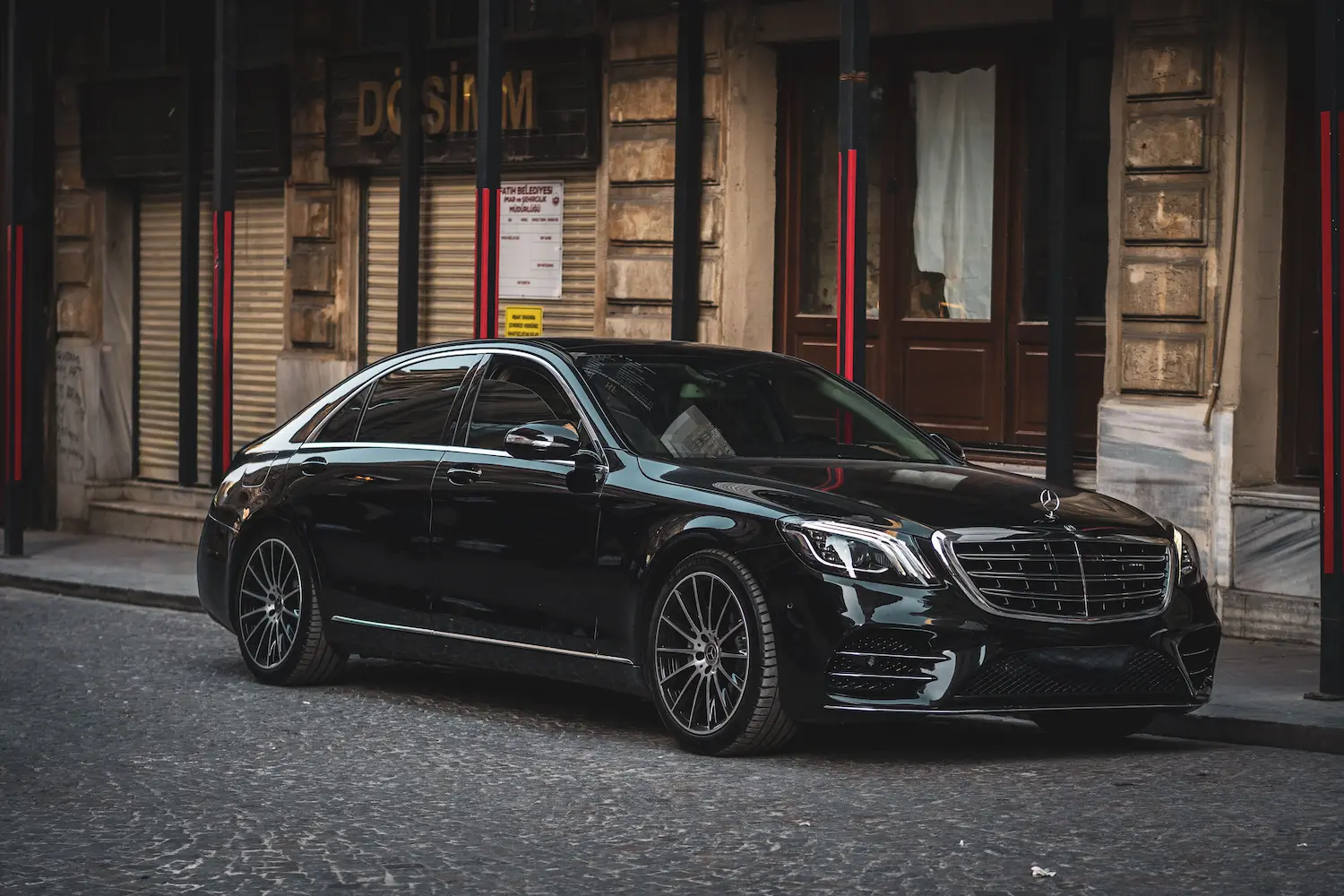

Long reserved for major metropolitan areas, chauffeur-driven transport is now taking root in mid-sized cities. Here is what has changed and what clients expect today.
Chauffeur-driven transport was built in Paris and remains heavily concentrated there: according to public industry data, the Île-de-France region accounts for 70% to 80% of French private hire vehicle (VTC) drivers, out of approximately 56,000 companies registered nationally. However, growth is no longer happening there. It is happening in cities with 50,000 to 250,000 inhabitants, where a structured demand for service has emerged without a corresponding level of supply. In cities like Le Mans, Angers, Tours, Poitiers, and Chartres, the dynamic is the same, driven by high-speed rail (TGV), remote work, and local businesses whose standards have aligned with those of major corporations.
The VTC model as it established itself in France addresses a metropolitan problem: many short trips, high density, and a clientele that books on demand and compares prices down to the last euro. Everything is optimized for volume—the app, dynamic pricing, algorithmic matching, and rapid trip turnover.
Transposed to a city of 145,000 inhabitants, this model does not work. The volume isn't there, distances are different, and above all, the demand is not the same: you don't book a chauffeur in Le Mans the way you do in Paris. The need is anticipated rather than immediate, often professional, and the quality of service carries more weight than the price.
It is this gap that created a blind spot. National platforms struggle to cover these areas because their business model relies on a density that does not exist there. Meanwhile, the taxi sector, while historically established, has not always evolved its offering to meet the service standards that this clientele now expects.
Le Mans is 55 minutes from Paris Montparnasse. Tours is one hour away. This proximity has transformed these cities into business hubs connected daily to the capital, with regular flows of executives, consultants, and managers moving in both directions.
However, the "last mile" remains the weak link. You get off the TGV at Le Mans station without knowing how to reach an industrial site in Allonnes or a meeting in Arnage. It is precisely on this segment—station, airport, corporate site—that the demand for chauffeur-driven transport has taken shape in the provinces.
The widespread adoption of hybrid work has had an effect few anticipated: it hasn't reduced business travel, it has concentrated it. Employees come in less often, but when they do, it is for intense, planned days with back-to-back meetings and tight schedules.
This change in pace changes the value of transport. An occasional but strategic trip cannot afford uncertainty. A company hosting a client once a quarter is not going to leave them to hunt for a taxi outside the station.
SMEs and mid-cap companies based in the regions work with national and international clients. When they host an auditor, an investor, or a foreign client, they apply the same hospitality standards as a Parisian headquarters—because that is what the visitor expects, and because hospitality is part of the company's image.
This requirement has created a steady B2B demand that didn't exist ten years ago in these regions: employee transfers, seminar shuttles, and dedicated vehicles for full-day site visits.
The final factor is the simplest: in many mid-sized cities, there was simply no service-oriented offering. Taxis, yes. Available vehicles, yes. But rarely a proposition built around advance booking, upfront pricing, guaranteed punctuality, and a dedicated point of contact.
It is this gap that explains the emergence of local players positioned in the premium segment—a positioning that would be difficult to maintain in Paris due to competition, but which meets a real need in the provinces.
This is the point most often misunderstood. In a mid-sized city, premium is not defined by the same criteria as in Paris.
A high-end vehicle is a prerequisite, not a selling point. What the client is actually buying is the certainty that the car will be there at the scheduled time, and that they won't miss their train or flight. In an area where alternatives are scarce, reliability is worth more than leather seats.
In major cities, the strength of platforms lies in efficient anonymity: you book, a vehicle arrives, you don't know the driver, and that works perfectly well.
In a mid-sized city, the logic is reversed. Regular clients want a point of contact, a direct number, and sometimes the same driver. Companies want to be able to call someone the day before to change a schedule. This direct relationship is precisely what an app cannot provide—and it is the structural advantage of local players.
An executive on a call between meetings, a confidential recruitment, an ongoing negotiation: the vehicle becomes an extension of the office. The driver's discretion—their ability to avoid small talk and refrain from commenting—is a matter of service, not just politeness.
The Sarthe region is a perfect illustration of this trend, as it combines several of the factors mentioned.
This combination—steady baseline demand, intense seasonal peaks, and historically limited supply—is found in most mid-sized French cities that host a major event or have a structured employment hub.
For individuals or businesses in mid-sized cities, three things have changed in recent years:
The shift is also economic. A driver in a mid-sized city may generate lower gross revenue than their Parisian counterpart, but they work in a much less competitive environment, build their direct client base faster, and therefore escape the heavy platform commissions that significantly cut into earnings much sooner.
Despite lower volume, net income can be comparable—and sometimes even higher—than that of a metropolitan driver who relies 100% on apps. We break down this math in our article on the average salary of a private hire driver.
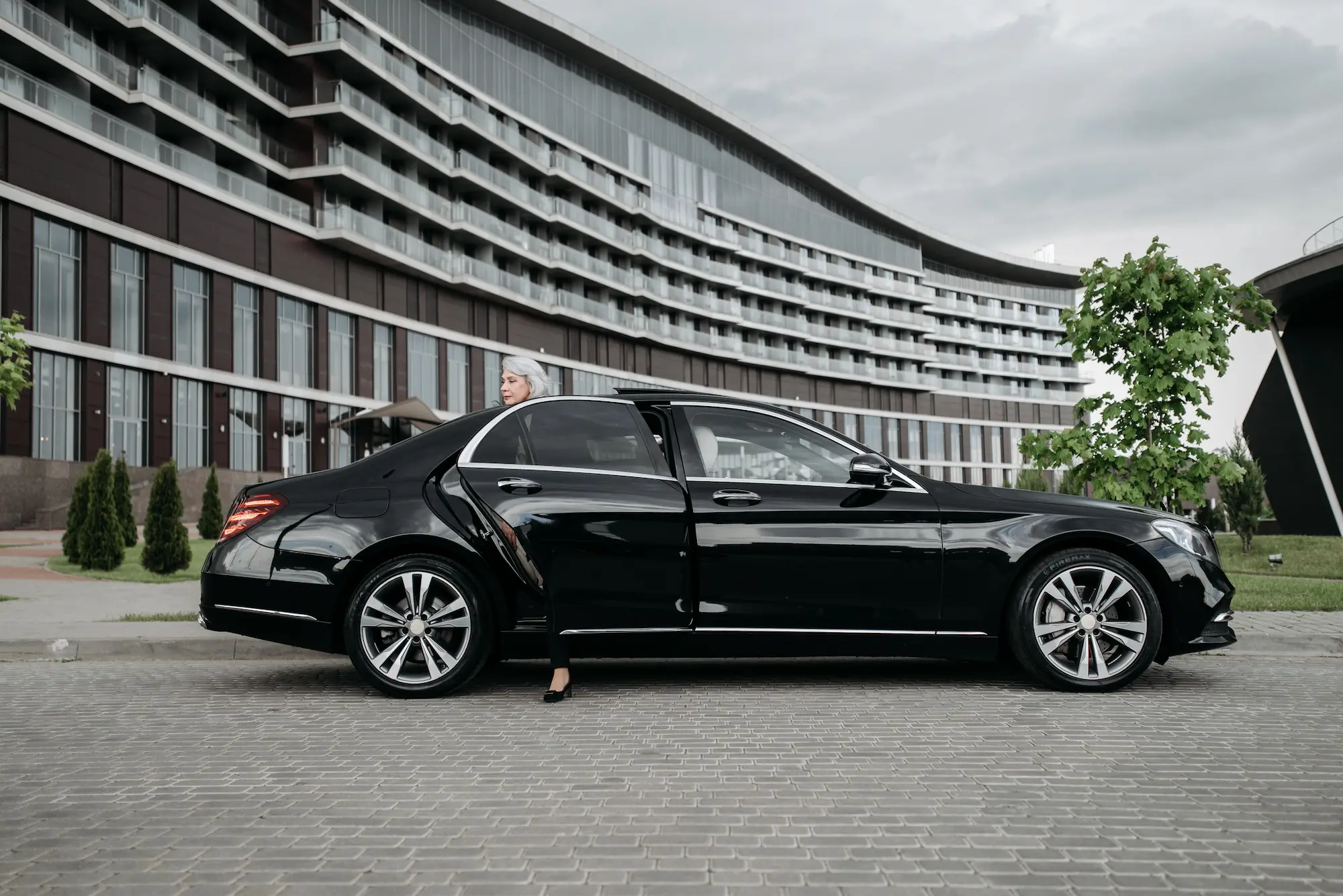
Most drivers are still concentrated in the Île-de-France region, but a structured local service has taken root in most mid-sized cities. It relies more on advance bookings and a loyal customer base than on on-demand app requests.
Private hire vehicles (PHVs) operate exclusively by reservation, with a fixed price known before departure, and cannot pick up street hails or park in taxi ranks. In practice, the difference perceived by the customer mainly concerns booking in advance and price transparency.
For a standard trip, a few hours is usually enough. For very early departures, large-capacity vehicles, or during peak periods—such as the 24 Hours of Le Mans week in Sarthe—it is wise to book several days or even weeks ahead.
No, generally the opposite for an equivalent trip. Operating costs are lower, and dynamic peak-hour pricing does not apply in these markets.
Framework data derived from public statistics on private passenger transport and the PHV operator register. The figures cited vary depending on counting methods and reference years. Article published in October 2026.